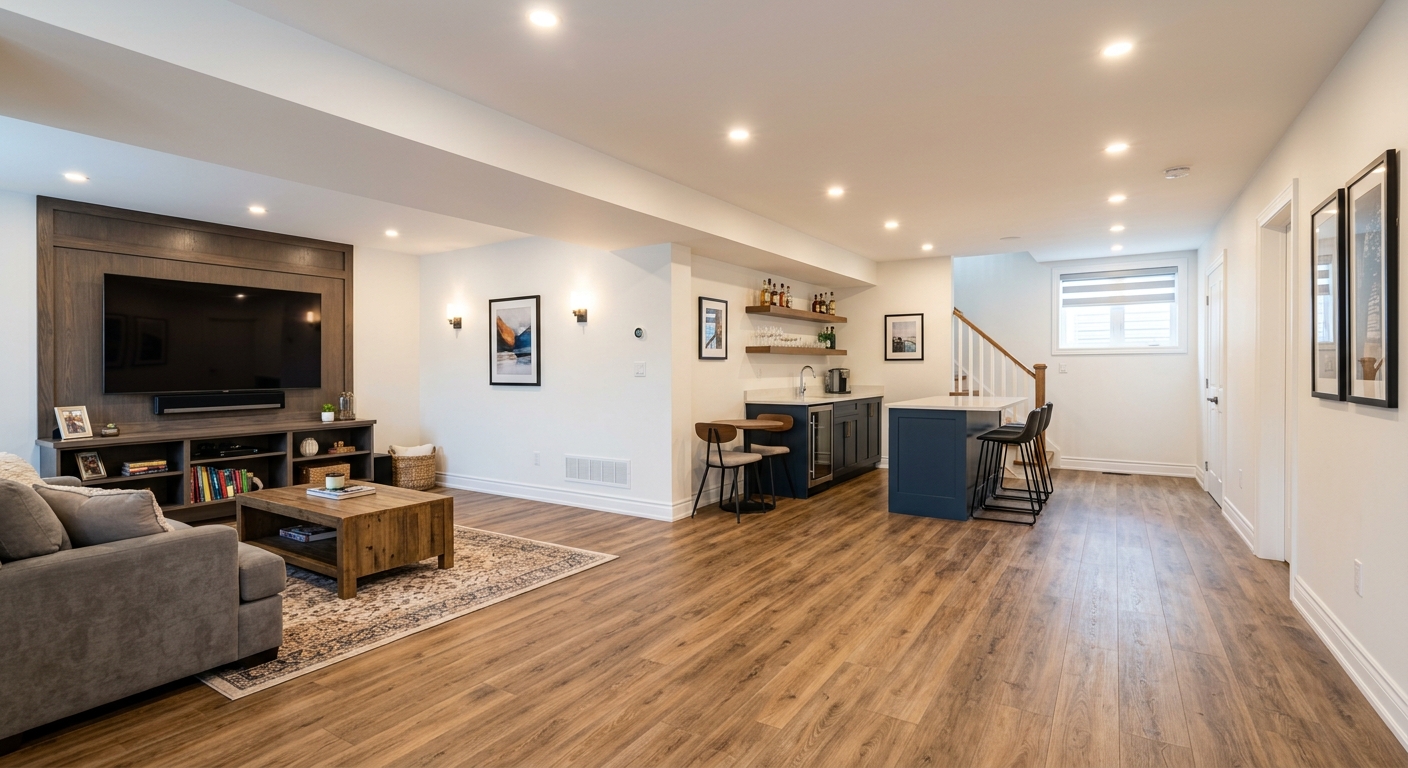
Basement finishing options and costs in Queensland
Queensland, Alberta homeowners typically start their basement plans with a simple question: “What can we finish—and what will it really cost?” In Queensland, the local housing stock is small and tight-knit, and the community footprint is limited (population 4,585 per the 2021 Census, Statistics Canada). That often means many basements are already built out as structural space but left unfinished or only partially completed. In Alberta’s colder climate, basement finishing is rarely “just drywall.” The big cost drivers are moisture control, frost-heave resilience, and making sure the insulation and vapour strategy perform through freeze–thaw cycles.
In the Calgary economic region, labour and material pricing can also move with permitting requirements—especially when you’re adding bedrooms, bathrooms, or a secondary suite. Availability of qualified electricians and plumbers matters too, because basement suites and wet areas require licensed trades and inspections. Neighbourhoods around Queensland’s older established residential pockets near major roads tend to see strong demand, because homeowners there are more likely to refurbish older foundations and upgrade mechanical systems before finishing.
Below is a practical cost comparison of common basement scopes in Queensland so you can line up your budget with the right level of work. Use it as a starting point before you request an itemised quote.
| Scope |
What's Included |
Permit Required |
Price Range |
| Basic rec room finish (drywall + lighting) |
Insulation where needed, drywall, ceiling finishing, LVP or carpet, pot lights, basic electrical layout, trim/doors, simple storage |
Usually no, unless you add new plumbing, bedrooms, or major electrical changes |
$15,000–$30,000 |
| Home office finish |
Insulation upgrade, drywall, dedicated circuits (as needed), outlets, lighting, flooring, door/trim, ventilation planning |
Often yes if electrical circuits are added or altered beyond minor work |
$20,000–$40,000 |
| Full legal secondary suite (complete rental unit) |
Fire separation, full kitchen & bath, bedroom(s) with egress, egress windows, dedicated electrical, plumbing rough-in/finishes, ceiling and wall systems, code-compliant ventilation |
Yes (suite scope, bedrooms, bath, and electrical/plumbing typically require permits) |
$65,000–$140,000 |
| Egress window installation only |
Concrete cutting/chipping (where required), new window + well, grading/drainage ties, rough-in adjustments, finishing around opening |
Yes for the structural opening and to meet egress requirements |
$2,500–$15,000 |
| Partial finish — framing and rough-in only |
Framing, insulation prep, vapour barrier setup, basic rough electrical/plumbing where applicable, subfloor prep (not final walls/finishes) |
Often yes if plumbing/electrical rough-in is added or walls conceal services |
$18,000–$35,000 |
| Luxury media or wet bar finish |
Accent walls/soffits, upgraded lighting plan, built-ins, sound-friendly materials, wet bar with plumbing (if included), premium flooring |
Yes if a wet bar adds plumbing/electrical beyond minor work |
$35,000–$90,000 |
Prices are estimates only and vary by project scope, site access and material selection.
What affects the price of basement finishing in Queensland
Even when two homeowners in the Calgary region describe the “same” basement project, quotes can swing by 30–50% because Alberta basements behave differently than finished space above grade. Moisture and thermal requirements are the most visible reason. Cold winters and freeze–thaw cycles raise frost-heave risk, so contractors often need exterior-grade insulation strategies, correct vapour barriers, and drainage/foundation checks before framing. That can be a higher upfront cost than some milder regions.
Coastal BC tends to prioritize waterproofing and mould prevention because it’s milder but wetter; the emphasis shifts more toward managing bulk water. In Alberta, the emphasis shifts toward both moisture control and thermal performance that survives winter. This changes how much material, labour, and troubleshooting time a basement needs. If your foundation shows dampness or cold-wall issues, the quote can move quickly—drying time, remediation scope, and how far finishes need to be delayed add cost.
Market demand also changes the numbers. In the Calgary economic region, basement suite demand is influenced by broader urban ROI dynamics—stronger in high-cost markets like Toronto and Vancouver, where homeowners often chase rental income that can recover renovation costs in about 4–7 years. That reality raises permitting and secondary-suite labour pressure in those markets, and it filters into materials pricing and trade availability across Alberta.
Concrete examples in Queensland: (1) adding a bathroom can push labour and tile/fixture time dramatically because plumbing rough-in, waterproofing, and inspection steps are unavoidable; (2) if you need an egress window, concrete cutting and structural adjustments can add thousands on top of finishing. A “basic rec room” often lands near the $15,000–$35,000 band, while a full suite commonly moves into the $65,000–$140,000 range once fire separation, egress, and wet areas are included.
| Price Factor |
Why It Matters |
Cost Impact |
| Finishing scope — rec room vs. full suite |
The biggest swing is whether you’re finishing one area or creating code-compliant living space with multiple rooms |
Often the difference between $15,000–$35,000 and $65,000–$140,000 |
| Egress window required — cutting concrete foundation adds cost |
Habitable sleeping areas below grade must meet egress requirements; openings aren’t “cosmetic” |
Typically $2,500–$15,000 on its own, sometimes more if structural changes are needed |
| Bathroom addition — rough-in plumbing and wet area tile |
Wet areas demand waterproofing, membrane systems, appropriate ventilation, and inspector sign-offs |
Can add several thousand to the finish, depending on pipe runs and tile scope |
| Electrical circuits — dedicated panel, pot lights, outlets |
Bedrooms, baths, kitchens, and suites usually require dedicated circuits and higher electrical scope |
Moderate to high increase based on circuit count and panel capacity |
| Insulation and vapour barrier — depth of thermal requirement in region |
Below-grade walls need correct assemblies to reduce condensation risk in Alberta’s cold winters |
Material + labour increase; improper assemblies can force costly rework |
| Flooring — waterproof LVP recommended for below-grade |
Some basement moisture events are unavoidable; resilient flooring reduces damage risk |
Small-to-medium upcharge vs. basic finishes, but better long-term performance |
| Ceiling height — bulkheads around ducts/beams reduce usable height |
Low headroom can limit design options, add framing complexity, and increase trim work |
Can raise labour due to soffits, altered layouts, and additional finishing |
| Permit and inspection fees — secondary suite requires multiple inspections |
Inspections for electrical, plumbing, and suite components add time and compliance cost |
Variable, but typically more than a simple rec-room finish |
Permits & regulations in Alberta
In Alberta, basement finishing that adds a sleeping room, a bathroom, new electrical circuits, plumbing rough-in, or a secondary suite requires a building permit in most cases. Egress windows are mandatory for any habitable sleeping area below grade—so if your plan includes a bedroom, expect egress to be part of the permit path. Secondary suite regulations vary by municipality, but you should always confirm zoning and the required fire separation between suites (commonly in the 30–45 minute range) with the local authority before work begins.
Here’s what typically DOES require a permit in Queensland-area practice: creating or altering bedrooms (including converting a rec room to a sleeping room), installing a new bathroom or relocating fixtures, running new plumbing lines or major plumbing rough-ins, adding a kitchen area as part of a suite, and making significant electrical upgrades (new circuits, upgraded panel work, or wiring for suite components). Electrical permits and inspections are separate from the building permit, which means you’ll need a licensed electrician to handle the electrical permit process. Plumbing work similarly requires a licensed plumber and a permit in most municipalities.
To verify a contractor’s Alberta credentials, start with their licence status and insurance certificates before you sign: check online trade/contractor registry listings for the applicable licence categories, request a current Certificate of Insurance (liability) and confirm the effective dates, and ask for proof of WCB/WSIB coverage clearance (the coverage letter or proof document). Only hire contractors who can provide these documents up front—basement projects are coordination-heavy, and missing coverage usually shows up later as delays.
Basement suite vs rec room — what makes sense in Queensland?
In Queensland, the two most common basement-finishing paths are (1) a legal secondary suite and (2) a rec room or home office. A legal secondary suite is the full rental-unit approach: it typically requires egress windows in each sleeping room, a full bathroom (and kitchenette when applicable), fire separation between dwelling units, and a building permit. Many homeowners also plan for a separate entrance and code-compliant ventilation. This path costs more—often in the $60,000–$120,000+ range once egress, bathrooms, and electrical/plumbing requirements are included—but it can materially change household cash flow if local rental demand is strong.
A rec room or home office is usually faster and less expensive. If you’re not adding a bedroom (or any sleeping area that triggers egress), you can often avoid the egress window requirement and keep permit complexity lower. In Alberta’s climate, you still need proper moisture control and insulation, but you typically spend less on fire-rated assemblies and suite-specific compliance.
Where Queensland homeowners often land on the decision is with a practical dollar example: if your basement layout allows a suite, you might compare a rec room at roughly $15,000–$35,000 versus a suite budget closer to $65,000–$140,000. The extra cost is justified when the suite meaningfully improves your mortgage affordability or when you can realistically rent the unit. If you’re planning to live in the home longer and don’t need rental income, the rec room frequently delivers better value per dollar.
Because secondary suite rules depend on zoning and local approvals, confirm what your municipality allows. Then align your plan with Alberta’s freeze–thaw realities—wet areas, vapour barriers, and drainage must be handled before framing so you’re not paying twice later.
| Option |
Typical Cost |
Permit Needed |
ROI Potential |
Best For |
| Rec room (basic finish) |
$15,000–$30,000 |
Usually no unless electrical/plumbing scope triggers it |
Low |
Families needing extra space quickly |
| Home office (dedicated space) |
$20,000–$40,000 |
Often yes if dedicated circuits are added |
Low to moderate (comfort/value) |
Work-from-home setups that need reliable lighting/power |
| Legal secondary suite (full rental unit) |
$65,000–$140,000 |
Yes (suite, sleeping areas, bathroom/kitchen, egress) |
Moderate to high when approved and rentable |
Households aiming to offset mortgage costs |
| In-law / nanny suite (non-rental) |
$40,000–$95,000 |
Often yes if it includes bathroom, plumbing rough-in, or sleeping areas |
Low (primarily lifestyle value) |
Multi-generational living with controlled access |
| Media / entertainment room |
$35,000–$90,000 |
Yes if wet bar/plumbing or major electrical changes are included |
Low to moderate |
Home entertainment with upgraded lighting and finishes |
| Home gym |
$20,000–$45,000 |
Usually no unless electrical/plumbing work is added |
Low to moderate |
Active households wanting durable, easy-care finishes |
How to choose a basement finishing contractor in Queensland
Choosing the right contractor in Queensland isn’t just about the lowest price—it’s about protecting your basement from moisture, code issues, and costly rework. Start by verifying Alberta licensing for the scope you’re buying: ask the company to confirm which trades will be doing which parts (electrical and plumbing should be performed by licensed trades, not by “subcontractor later” promises). Then check liability insurance: request a current Certificate of Insurance and verify it covers the work being performed. Finally, confirm WCB/WSIB coverage by asking for a clearance letter or proof document; it should show coverage is active for the workers involved. If they can’t provide these items quickly, treat it as a red flag.
For pricing, insist on 2–3 itemised written quotes with a labour and materials breakdown (not a single lump-sum number). Make sure the quote spells out what’s included: permit pull included or not, demolition/disposal included, and whether moisture remediation (if needed) is an allowance or excluded. Basement finishing can uncover hidden issues, so a good quote identifies assumptions and contingency allowances up front.
Warranty matters. Look for a workmanship warranty (commonly 1–2 years, but confirm duration in writing), separate product/manufacturer warranties for flooring, lighting, insulation systems, and ensure how claims work if a product fails. Payment schedules should be conservative: never pay more than 10–15% upfront; use a holdback until final completion and walkthrough. Also get a written start date and a completion estimate.
- Ask which permit(s) they will apply for, and who pays the permit fees.
- Require itemised pricing for insulation, vapour barrier/air sealing, drywall, flooring, and lighting.
- Confirm who supplies and installs egress windows if a bedroom is planned.
- Get in writing whether disposal/dump fees are included.
- Verify electrical scope: dedicated circuits vs. “left as existing.”
- Confirm plumbing scope: rough-in only vs. full trim-out and waterproofing.
- Request a moisture/thermal plan for below-grade walls (vapour strategy and insulation thickness assumptions).
- Ask about ventilation approach (bath fan/HRV considerations) for wet areas and suites.
- Check that they will protect flooring and finishes from construction dust and tracked-in grit.
- Clarify tolerances for ceiling height reductions from bulkheads and ductwork.
- Ensure they list a warranty start date tied to substantial completion.
- Confirm the job schedule (days on site per phase) and who is the onsite contact.
Red flags in Queensland basement work: contractors who won’t show insurance/WCB proof before quoting, quotes that omit moisture-control details (vapour barrier/air sealing) while assuming “standard drywall,” aggressive payment terms (large deposits beyond 10–15%), vague scopes that don’t specify permits/disposal, and any proposal that avoids naming who will do electrical/plumbing and how inspections will be handled.
Frequently asked questions — basement finishing in Queensland
What permits are required for a basement suite in Queensland?
In Alberta (including the Queensland area), a basement suite generally triggers a building permit because you’re creating a dwelling unit with sleeping areas, usually a bathroom/kitchen, and new electrical and plumbing components. If you’re adding or converting rooms into a bedroom, egress is required—so an egress window permit and compliance steps will be part of the process. You’ll also typically need separate permits for electrical and plumbing, handled by licensed trades, with inspections booked independently from the building permit. Secondary suite requirements can vary by municipality, so confirm zoning and fire-separation expectations (commonly in the 30–45 minute range) with the local authority before construction starts. For budgeting, suite work often lands closer to the $65,000–$140,000 band once permits, egress, and wet areas are included.
How do I add a bathroom to my Queensland basement?
Adding a bathroom in Queensland should be treated as more than “installing fixtures.” You’ll need a planned plumbing route from where supply and drain lines are accessible, plus proper waterproofing and ventilation so the below-grade environment stays dry in Alberta’s winter conditions. Because plumbing rough-in is part of the scope, permits and a licensed plumber are normally required. Many homeowners choose waterproof LVP or other moisture-tolerant finishes around the wet area because small basement humidity swings can happen even with good insulation. If your quote is truly comparable, it should specify waterproofing materials, membrane/tile system details, and whether rough-in only or full bathroom finish is included. A bathroom upgrade can move a project significantly above a basic rec-room finish, often pushing totals toward the mid-range of the suite/partial finishing budgets depending on scope.
What is the difference between a finished and semi-finished basement?
A semi-finished basement is usually closer to “structure and rough systems” than a fully livable space. Typical semi-finished work includes framing, insulation prep, vapour barrier/air-sealing steps, and sometimes electrical/plumbing rough-in—but it may stop short of complete drywall, trim, insulation-upgraded walls in all areas, and finished flooring and ceilings. A finished basement completes the scope with finished drywall and ceilings, flooring, trim/doors, lighting, and generally a more complete ventilation plan. In Alberta, the line between the two matters because below-grade moisture management isn’t optional; even a semi-finished stage should still treat vapour control and insulation correctly so you don’t trap moisture once you close walls. Costs often reflect that: basic finished rec rooms tend to fall around $15,000–$35,000, while suite-level finishing climbs much higher due to bathrooms, egress, and compliance.
How do I soundproof a basement suite in Queensland?
Sound control is essential in a basement suite because shared walls and plumbing lines can carry noise. In Queensland/Alberta basements, soundproofing is also tied to insulation and vapour strategy—good wall assemblies help both thermal comfort and sound attenuation. Ask contractors about staggered or resilient channel methods, insulation density, and continuous air sealing (so you’re not letting noise travel through gaps). For plumbing noise, verify that the plan includes proper pipe isolation (hanger type, sleeves, and insulation around lines) because that’s often where “mystery noise” comes from. If you’re finishing a suite, fire separation systems can overlap with sound control, but you still want explicit details in the quote about acoustic performance. Expect soundproofing to add to your budget, especially when you’re building full walls, ceilings, and wet areas—often keeping you within or near the $65,000–$140,000 suite band depending on the level of finish.
How much does it cost to finish a basement in Queensland?
Basement finishing in Queensland typically depends on scope, moisture conditions, and whether you’re adding bedrooms/bathrooms. For a straightforward finished rec room (drywall, flooring, and pot lights), many projects land around the $15,000–$35,000 range. If you expand into a home office with dedicated circuits and improved insulation details, budgets often move up toward $20,000–$40,000. A legal secondary suite is a different category because of egress, fire separation, and full wet-area work, commonly landing within $65,000–$140,000. Alberta’s cold winters also mean contractors may need stronger vapour barrier and insulation strategies to manage condensation risk and freeze–thaw effects on below-grade assemblies. Before comparing quotes, make sure they include the moisture/thermal plan and the permit scope; that’s where many “apples-to-oranges” price gaps come from.
Do I need a permit to finish my basement in Alberta?
In Alberta, finishing rules hinge on what you change. If your project is a simple upgrade—like finishing walls and floors without adding bedrooms, bathrooms, or major new electrical/plumbing—many homeowners can proceed without a building permit, though electrical permits may still apply depending on wiring changes. However, if you add a sleeping room, create a bathroom, add new electrical circuits, do plumbing rough-in, or build a secondary suite, a building permit is typically required. Egress windows are mandatory for any sleeping area below grade. In practice, Queensland-area contractors will help you confirm permit needs, but you should verify the scope in the contract and ask which permits they will apply for. If you’re unsure, treat it like a suite-scale budget conversation: egress and permitting are cost multipliers, and basic finishes that land around $35,000–$90,000 usually already include more complexity than people expect.