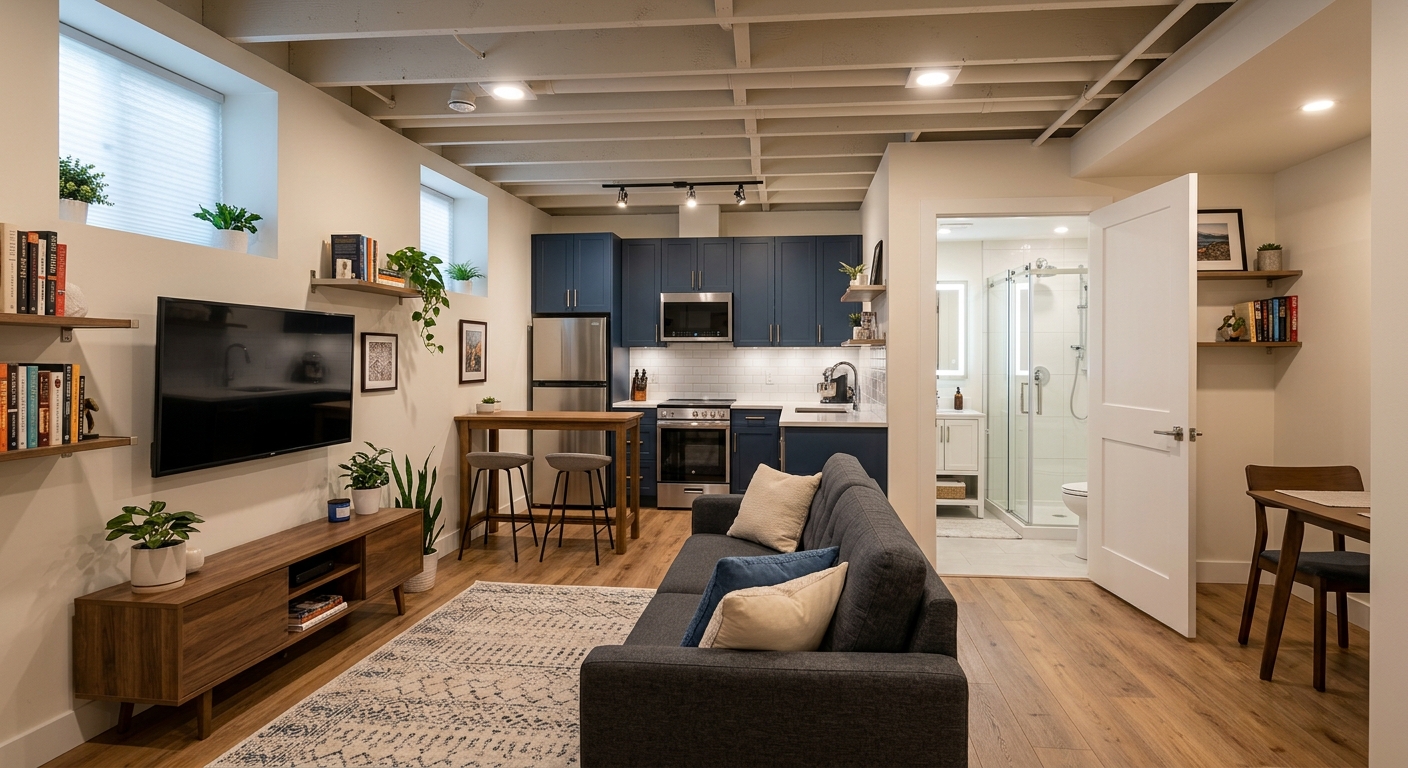
Basement finishing options and costs in Chase River
Chase River, British Columbia has a lot going for basement renovations—close access to the Lower Mainland–Southwest market, plenty of detached housing stock, and a steady demand for usable space. With a population of about 2,900 people (Statistics Canada, 2021 Census), fewer local contractors chase more active projects, so planning ahead matters. In most neighbourhoods around Chase River, detached homes typically have a full basement, and many start out unfinished or only partially finished—meaning you’re often budgeting for moisture mitigation and code-compliant insulation before you even get to drywall and flooring.
In the Lower Mainland–Southwest, pricing is shaped by a wetter climate than Ontario or the Prairies. That shifts the “big cost levers” toward waterproofing, drainage checks (including foundation weeping/weep paths), and mould prevention, rather than battling deep frost heave. At the same time, basement finishing in this region is pulled upward by suite demand in the broader Vancouver-area rental market, which supports stronger labour pricing and more attention to permit/inspection requirements.
Local trade demand is especially noticeable in the Chase River area when homeowners want quick, dry space for home offices and rec rooms in winter—because contractors can schedule around service calls for moisture remediation and permit availability. If you’re comparing budgets, the table below is a practical starting point for scoping the work you actually want done.
| Scope |
What's Included |
Permit Required |
Price Range |
| Basic rec room finish |
Drywall, ceiling finishes, flooring, pot lights (where feasible), trim, paint, basic electrical allowance |
Usually only if you add new electrical circuits or alter plumbing; confirm with your contractor |
$15,000–$30,000 |
| Home office finish |
Insulation upgrades, vapour/air control measures (as needed), drywall, dedicated circuits (typically), acoustic considerations, flooring, paint |
Often required if adding circuits or modifying service; permit needs depend on scope |
$20,000–$45,000 |
| Full legal secondary suite (bath, kitchen, egress, fire separation) |
Kitchen, full bath, sleeping area(s) with egress, fire separation between floors/suites where required, mechanical ventilation upgrades, framing, insulation, interior drainage/moisture strategy as needed |
Yes—typically building permit plus separate electrical/plumbing permits |
$80,000–$130,000 |
| Egress window installation only |
Window cut-out, structural support modifications, window supply & install, flashing, grading/landing as required by conditions, permits/engineering when needed |
Yes, egress work for a habitable sleeping area |
$6,500–$11,000 |
| Partial finish — framing and rough-in only |
Layout, framing, rough-in electrical/plumbing (if applicable), vapour control prep, subflooring allowances, blocking for future fixtures |
Often required if adding plumbing/electrical rough-in; confirm scope |
$15,000–$35,000 |
| Luxury media or wet bar finish |
Feature wall/ceiling detailing, premium flooring, bar cabinetry/countertops, upgraded electrical, sound isolation elements, specialty lighting |
Yes if adding circuits, moving plumbing, or changing structure |
$35,000–$80,000 |
Prices are estimates only and vary by project scope, site access and material selection.
What affects the price of basement finishing in Chase River
Homeowners in Chase River often see quotes swing by 30–50% for what looks like the “same” basement finish. The difference usually comes down to how contractors handle moisture, how much electrical/plumbing work is included, and whether the project is treated like a simple interior renovation or like a code-driven suite build. In the Lower Mainland–Southwest, elevated trades pricing and tighter scheduling for permit-ready work can push labour and overhead higher than in many inland Canadian markets, even when the square footage is comparable.
Moisture and thermal requirements are the biggest technical cost drivers and vary sharply by region. Ontario and Alberta basements contend with cold winters and frost-related movement, which can require thicker exterior-grade insulation, robust vapour barriers, and careful drainage and foundation detailing before framing. Coastal BC’s milder but wetter conditions shift priorities toward waterproofing, foundation crack/edge attention, and mould prevention—including attention to slab moisture and ventilation/dehumidification. That means a “finish-ready” basement in one region may still require prep work in BC.
Local examples that commonly raise cost in Chase River include: finding persistent dampness near slab edges that needs targeted drainage or vapour control upgrades; discovering knob-and-tube-era wiring or undersized panels during an electrical scope review; and needing additional ventilation for a bathroom or wet bar wet area. Conversely, cost can be lower when the existing foundation is dry, the mechanical system is modern, and you’re staying within a basic rec-room scope (often aligned with the regional partial finishing / rec room band of about $15,000–$35,000). If you’re building toward a legal secondary suite, budgets typically move into the $60,000–$140,000 band because of egress, fire separation, and the expanded permit and inspection workload.
| Price Factor |
Why It Matters |
Cost Impact |
| Finishing scope — rec room vs. full suite |
Suite work adds bathrooms, kitchens, fire separations, and more inspection points |
Largest swing; can move you by $30,000+ on similar-sized basements |
| Egress window required — cutting concrete foundation adds cost |
Concrete cutting, structural checks, and proper flashing/drainage around the new opening |
Typically a notable add-on (often several thousand dollars on top of finish) |
| Bathroom addition — rough-in plumbing and wet area tile |
Moving waste lines, venting, waterproofing membranes, and backer materials increase labour |
Often pushes projects toward higher bands when the basement is not already plumbed |
| Electrical circuits — dedicated panel, pot lights, outlets |
Dedicated circuits and panel capacity checks, plus code-compliant layout |
Can add time for electrician visits and rework if discovered late |
| Insulation and vapour barrier — depth of thermal requirement in Lower Mainland–Southwest |
BC wet climate needs correct assemblies and air/vapour control to reduce mould risk |
Meaningful material/labour increase versus “finish-only” scopes |
| Flooring — waterproof LVP recommended for below-grade |
Below-grade condensation and minor moisture events require resilient flooring systems |
Can shift material cost by a few thousand dollars depending on selection |
| Ceiling height — bulkheads around ducts/beams reduce usable height |
Lower height impacts framing strategy, lighting choices, and feel of the space |
May require custom soffits and reduce labour-efficiency |
| Permit and inspection fees — secondary suite requires multiple inspections |
More steps mean more trades visits and scheduling coordination |
Higher administrative cost and potential delay costs if timelines slip |
Permits & regulations in British Columbia
In British Columbia, basement finishing that adds a sleeping room, a bathroom, new electrical circuits, plumbing rough-in, or a secondary suite generally requires a building permit. If you’re creating a habitable sleeping area below grade, egress windows are mandatory—so contractors should not treat egress as optional or “nice to have.” For secondary suites, regulations vary by municipality in areas such as zoning confirmation and how fire separation is implemented, commonly using a 30–45 minute fire separation approach between suites depending on the design and building layout. Always confirm the local requirements with the authority having jurisdiction before demolition or framing.
Concrete examples of work that DOES require a permit in most cases: adding or relocating plumbing for a bathroom/kitchen; adding a new electrical circuit or increasing load; creating a legal suite (including kitchenette, bathroom, and egress in sleeping rooms); and any structural changes tied to egress openings. Work that typically does NOT require a permit (when no electrical/plumbing/sleeping-room changes occur) includes: painting, replacing existing flooring, or finishing surfaces where the electrical/plumbing layout is untouched and no new habitable rooms are created.
To verify your contractor in Chase River/BC: (1) check their business and contractor licensing where applicable using online provincial resources; (2) request a certificate of liability insurance that matches the job value and dates; and (3) ask for proof of coverage/clearance for worker-related insurance (commonly referenced through WSIB/WCB documentation). Confirm the clearance letter is current. Don’t rely on verbal assurances—get documents before signing, and keep copies with your contract paperwork.
Basement suite vs rec room — what makes sense in Chase River?
In Chase River, you’re usually choosing between two practical paths: (1) a legal secondary suite, or (2) a rec room / home office finish. The suite route is the “most expensive, most regulated, and highest potential ROI” option. A legal secondary suite requires a building permit, egress window(s) for each sleeping area below grade, a full bathroom, and typically a kitchenette setup—along with fire separation between floors/suites depending on the building design. You’ll also want zoning confirmation, because not every municipality allows secondary suites.
The rec room or home office path is typically faster and cheaper because you can avoid egress requirements unless you add a bedroom. If you stick to a common plan—drywall, insulation where needed for comfort and condensation control, flooring, and a lighting plan—pricing often aligns with the regional partial finish and rec room bands, roughly $15,000–$35,000 for simpler scopes. In a wetter BC basement, the “value” is still in getting moisture control right early; even a rec room benefits from correct assemblies so you’re not paying twice for remediation.
How to frame ROI in Chase River: focus on whether you can realistically rent the space and whether you’ll recapture costs through rental income. Suite demand across the Lower Mainland–Southwest is strong due to housing costs and tight rental markets, so a well-built suite can justify budgeting in the $60,000–$120,000+ range. For example, if you’re deciding between a basic rec room at about $25,000 and a suite at about $95,000, the extra ~$70,000 can be justified only if the rental plan is stable and the permit approvals are straightforward. If you’re uncertain about approvals or timing, a rec room home office finish is often the safer first step.
In British Columbia, secondary suite approval timelines vary by municipality and complexity, but expect a structured process with plan review and multiple inspection steps after permits are issued—so schedule it like a project, not a quick weekend renovation.
| Option |
Typical Cost |
Permit Needed |
ROI Potential |
Best For |
| Rec room (basic finish) |
$15,000–$30,000 |
Often no, unless adding circuits/plumbing or creating new sleeping areas |
Low (no rental income) |
Extra living space, media area, kid zone |
| Home office (dedicated space) |
$20,000–$45,000 |
Often if adding dedicated circuits or changing service |
Low (cost-to-value through usability) |
Work-from-home needs, privacy, sound control |
| Legal secondary suite (full rental unit) |
$80,000–$130,000 |
Yes (suite + egress + building permit; plus electrical/plumbing permits) |
High (rent income can offset costs over time) |
Families planning to rent, long-term hold homes |
| In-law / nanny suite (non-rental) |
$60,000–$110,000 |
Often yes if you’re adding a bathroom or new sleeping areas |
Medium (value through family accommodation) |
Care needs, multi-generational living |
| Media / entertainment room |
$35,000–$80,000 |
Often yes if upgrading electrical substantially |
Low to medium |
Custom lighting, sound treatments, feature walls |
| Home gym |
$15,000–$40,000 |
Typically no unless plumbing/electrical work is expanded |
Low |
Health space with durable, moisture-resistant finishes |
How to choose a basement finishing contractor in Chase River
Choosing the right contractor in British Columbia starts with verifying coverage. Ask for proof of British Columbia licensing (where applicable for their scope), a current certificate of liability insurance, and current WSIB/WCB documentation or a clearance letter showing coverage status. In practice, you’ll often get better results when the contractor provides a clear paper set before work begins: (1) insurance certificate with project/job coverage listed, (2) licence details matching their trade scope, and (3) a current clearance document for workers. Don’t accept “we’re insured” without paperwork.
Next, get 2–3 itemised written quotes that separate labour and materials (and clearly list what’s included for moisture control, insulation assemblies, and any electrical/plumbing work). Avoid lump sums that hide unknowns like debris disposal, dump fees, and how drywall allowances are handled if the basement has unusual walls. Read the scope line by line: is the permit pull included? Who pays re-inspection fees if the first pass fails?
Warranty matters in below-grade work: ask for workmanship warranty length, whether product/manufacturer warranties transfer to you, and what “exclusions” apply to moisture or ventilation. Payment schedule is another safety step—never pay more than 10–15% upfront, and use a holdback until the job is complete and deficiencies are corrected. Finally, request a start date and a completion estimate in writing, with scheduling milestones tied to inspection steps.
- Confirm their BC trade scope matches your plan (finishing only vs suite-ready scope).
- Request a certificate of liability insurance and verify dates match your project timeline.
- Ask for WSIB/WCB clearance/coverage proof (not just a policy number).
- Get itemised labour/material quotes—no “mystery allowances” for insulation or electrical.
- Verify if permit pulling is included and who is responsible for revisions.
- Confirm egress and bathroom rough-in responsibilities if your plan includes bedrooms/sleeping areas.
- Ask how they assess moisture (visual checks vs moisture meter/testing strategy).
- Require a written scope for disposal/dump fees and site cleanup.
- Clarify electrical scope: outlets, pot lights, dedicated circuits, and panel upgrade allowances.
- Check warranty terms in writing (workmanship and product warranty transferability).
- Use a staged payment schedule: small deposit, progress payments, final holdback.
- Confirm timelines include inspection lead times for plumbing/electrical (and suite inspections if applicable).
If you’re comparing contractors in Chase River, red flags include: quotes that ignore moisture control and vapour/air-assembly details; refusing to show insurance/coverage documentation; blanket “allowances” that are too low to cover real conditions; starting framing before a permit strategy is confirmed for any bedroom/bath/suite work; and vague warranties that don’t specify workmanship duration or exclusions related to below-grade humidity.
Frequently asked questions — basement finishing in Chase River
How much does a basement suite cost in Chase River?
A legal secondary suite in Chase River typically lands in the $60,000–$140,000 range depending on how much of the basement is already finished, how many sleeping areas you’re creating, and whether you need an egress window for each habitable sleeping room. In the Lower Mainland–Southwest, moisture mitigation, fire separation detailing, and the scheduling/inspection workload can push costs toward the upper end, especially if plumbing and electrical updates are extensive. As a planning reference, many comparable builds land around the $80,000–$130,000 band when a suite includes a full bathroom and kitchenette, plus required life-safety components. Your final number depends on site access, existing foundation condition, and how much electrical/plumbing is truly “ready to tie in.” (Statistics Canada, 2021 Census)
What insulation do I need for a basement in Chase River's climate?
In Chase River and across coastal BC’s wetter climate, insulation is about comfort, condensation control, and correct assembly—not just “more R-value.” Contractors typically focus on insulating basement walls in a way that manages air leakage and vapour movement, with the goal of reducing cold surfaces where condensation and mould can start. If there’s existing moisture, the insulation strategy may need to change and be paired with waterproofing/drainage fixes before framing. Many projects also include insulation upgrades in exterior-wall cavities and sometimes improvements to slab-edge assemblies depending on your foundation build. If your scope is more ambitious (suite vs rec room), you’ll see more detailed insulation planning and mechanical ventilation coordination because humidity control is tied to code-compliant habitable space.
Do I need a vapour barrier in my Chase River basement?
Often, yes—however the “right” vapour control approach depends on the wall/foundation assembly you have and the moisture conditions currently present. In British Columbia’s milder but wetter environment, the aim is to avoid trapping moisture inside assemblies while still limiting vapour diffusion into cold framing surfaces. A contractor should assess existing conditions first (signs of dampness, musty odours, efflorescence, or prior seepage), then select an appropriate vapour/air strategy. If you’re finishing a suite or adding a bathroom, the humidity loads are higher, making correct vapour and ventilation design even more important. This is why two quotes can differ: one contractor treats vapour control as an afterthought, while a better-prepared crew sequences drainage/waterproofing and insulation before drywall.
What flooring is best for a finished basement in Chase River?
For below-grade spaces in Chase River, homeowners usually get the best long-term results with moisture-tolerant flooring systems. Waterproof LVP (luxury vinyl plank) is a popular choice because it performs well if there’s minor condensation or small moisture events, and it’s easier to replace sections than traditional materials. If you use carpet, it should be paired with careful underlay and moisture control because carpets can hold odours and can be harder to remediate if dampness appears. In wet BC basements, the flooring decision should come after (or at least alongside) your moisture strategy: waterproofing/drainage and proper vapour control determine how well flooring will last. Your contractor should also discuss subfloor preparation and levelness to avoid issues like hollow spots.
How do I prevent moisture problems in a finished Chase River basement?
Moisture prevention is the foundation of basement finishing in Chase River—especially in BC where wet weather is common. Start with assessment: look for water staining, damp slab edges, musty odours, and any foundation crack history, then address root causes before framing. Many successful projects include drainage checks (interior and perimeter paths), sealing vulnerable foundation areas as needed, and correct vapour/air control as part of the insulation assembly. Mechanical support matters too: a properly sized dehumidifier and correct ventilation strategies reduce humidity spikes from showering and cooking in bathrooms/suites. If you’re building a suite, moisture and odour control become more demanding, which is one reason suite scopes often sit in the higher budget bands—because the right sequencing and materials cost money up front.
What is the ROI on finishing a basement in Chase River?
ROI depends heavily on what you’re finishing and whether you can legally rent it. A basic rec room or home office mainly increases livability and can support resale value, but it usually doesn’t create direct monthly income—so ROI is more about how the space changes your household’s day-to-day life. A legal secondary suite can have much stronger ROI potential because rental income can help pay back the renovation over time, which is a major driver of suite demand across the Lower Mainland–Southwest market. As a rough planning reference, many homeowners compare a rec-room finish in the $15,000–$35,000 band against a suite budget closer to $80,000–$130,000 when all life-safety and permit requirements are included. In practice, your repayment timeline hinges on approval speed, ongoing operating costs (utilities, dehumidification), and whether the unit stays rentable. (Statistics Canada, 2021 Census)