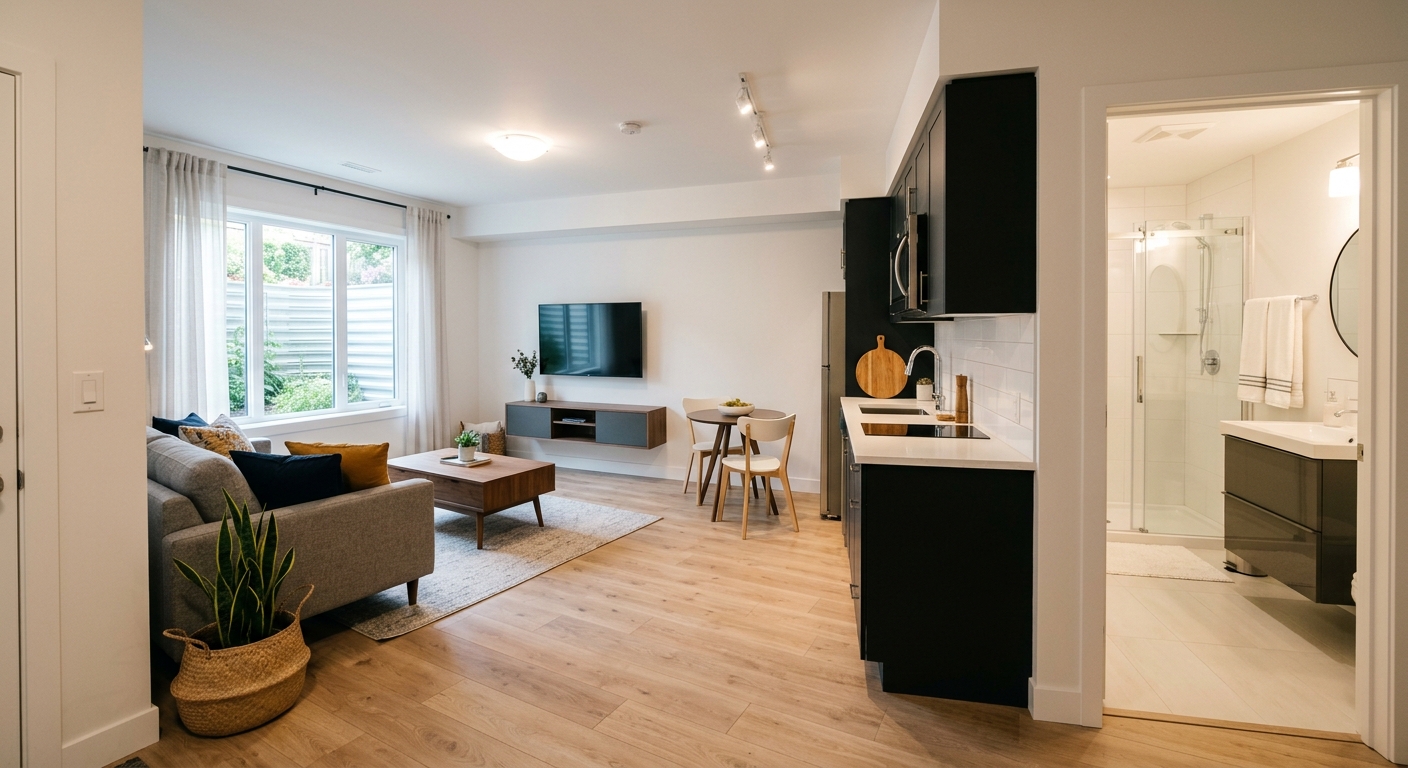
Basement finishing options and costs in Government Road
Basement finishing in Government Road, British Columbia, is usually planned with the realities of our local housing stock and market pressure in mind. With a small population of 2,325 residents (Statistics Canada, 2021 Census), the area still draws from the broader Lower Mainland–Southwest demand that pushes trade availability and pricing when projects overlap with inspections and material lead times. In many Government Road neighbourhoods, most older detached homes have full basements—often unfinished or only partially finished—so homeowners commonly start with moisture control and code-compliant finishes before they add living space.
Lower Mainland–Southwest costs are shaped by a wet climate and how that interacts with building code. Compared with colder inland regions, we’re less focused on frost heave and more focused on waterproofing, foundation crack management, and keeping slab and wall moisture under control to prevent mould. That said, even in coastal BC conditions, basements can feel “cool and damp,” so insulation choices, vapour control, drainage details, and ventilation/dehumidification are part of the budget—especially when you’re finishing hallways, bathrooms, or any area that could become a sleeping space.
Local suite demand also influences pricing. In Government Road, trade work tends to be especially in demand near the busier commuter corridors and established detached pockets (where homeowners are most likely to consider a rental-ready basement). If you’re weighing rec room upgrades against a legal secondary suite, the cost differences are big—so the table below helps you compare apples-to-apples before you request quotes.
| Scope |
What's Included |
Permit Required |
Price Range |
| Basic rec room finish |
Drywall, insulation where needed, flooring, pot lights, paint, simple trim/doors |
Often no (confirm if adding bedrooms or new plumbing/electrical circuits) |
$15,000–$28,000 |
| Home office finish |
Insulation upgrades, drywall, flooring, dedicated circuits/outlets, lighting, ventilation provisions |
Often no (confirm electrical/panel changes) |
$18,000–$35,000 |
| Full legal secondary suite (bath, kitchen, egress, fire separation) |
Full bathroom, kitchenette, second set of fire-rated details, insulation/vapour control, ventilation, egress window, often separate entry planning |
Yes |
$60,000–$120,000 |
| Egress window installation only |
Cutting and installing egress window, sill pan/water management details, rough-in finishing |
Yes if creating/confirming a legal sleeping area |
$5,000–$12,000 |
| Partial finish — framing and rough-in only |
Framing, insulation/vapour barrier install (where applicable), electrical rough-in locations, plumbing rough-in stubs (if planned) |
Often yes if rough-in triggers permit scope—confirm with contractor |
$12,000–$30,000 |
| Luxury media or wet bar finish |
Feature wall, built-ins, acoustic treatments, upgraded lighting, wet bar plumbing/electrical as required, higher-end flooring and finishes |
Yes if adding plumbing/electrical work beyond minor changes |
$35,000–$80,000 |
Prices are estimates only and vary by project scope, site access and material selection.
What affects the price of basement finishing in Government Road
In the Lower Mainland–Southwest, two homeowners can receive quotes that differ by 30–50% for what looks like the “same” basement because costs aren’t driven only by drywall and flooring. They’re driven by moisture engineering, insulation depth, electrical/plumbing scope, and whether the project triggers suite-related design and inspection work. In British Columbia, the wet climate shifts the critical path: waterproofing, drainage strategies, and mould prevention can add substantial cost early, even before you see any finish materials.
Moisture and thermal requirements also vary significantly by region. In Ontario and Alberta, contractors often prioritize frost-related durability—think frost-resistant exterior-grade approaches and robust vapour control before framing—while coastal BC prioritizes managing rainfall-driven moisture and keeping basement humidity stable. In Lower Mainland–Southwest basements, it’s common to budget for interior moisture control and dehumidification readiness, because a “nice-looking” finish over an moisture-issue foundation typically doesn’t last.
Suite demand can further move pricing upward. Where rental income can recover renovation costs within about 4–7 years in expensive urban markets (a pattern seen in Toronto and Vancouver), labour rates, design/engineering costs, and permitting/inspection fees rise. Government Road is influenced by that same broader rental-market pressure, so a legal secondary suite commonly lands in the full-basement band, such as $60,000–$120,000, while a simpler rec room finish may sit closer to $15,000–$35,000 depending on how much electrical and moisture work is needed.
Concrete local examples that change cost in Government Road: (1) a basement with older foundation weeping tile performance may require interior drainage and sump upgrades before drywall, pushing the project toward the higher end of full basement finishing; (2) a home with low ceiling height and existing ducts often requires bulkheads and careful routing—reducing usable height but increasing labour time; (3) homes that already have a partial bathroom rough-in can lower cost versus adding all wet-area plumbing from scratch.
| Price Factor |
Why It Matters |
Cost Impact |
| Finishing scope — rec room vs. full suite |
Suites add kitchen/bath, fire separations, ventilation, and more trades |
Largest swing; can move projects from rec-room ranges into suite budgets |
| Egress window required |
Cutting into the foundation and adding correct water management |
Often several thousand dollars; affects both labour and materials |
| Bathroom addition |
Rough-in plumbing, wet-area waterproofing, and tile installation |
Can add major cost due to plumbing, membranes, and inspection steps |
| Electrical circuits |
Dedicated circuits, additional outlets, and pot lights |
Higher when you need panel capacity work and multiple inspections |
| Insulation and vapour barrier |
Lower Mainland–Southwest requires careful moisture control and thermal detailing |
Costs more when upgraded assemblies are needed for damp basements |
| Flooring |
Below-grade moisture risk makes waterproof LVP a common recommendation |
May increase material cost but reduces long-term failures |
| Ceiling height |
Bulkheads around ducts/beams reduce usable height and add labour |
Can increase build time and affect layout, impacting total cost |
| Permit and inspection fees |
Secondary suites trigger multiple review steps |
Higher when more inspections are needed across trades |
Permits & regulations in British Columbia
In British Columbia, basement finishing that adds a sleeping room, bathroom, new electrical circuits, plumbing rough-in, or any secondary suite typically requires a building permit. If you’re creating a habitable sleeping area below grade, egress windows are mandatory. Secondary suite regulations can vary by municipality, so before you start you should confirm zoning, suite eligibility, and the required level of fire separation (often designed to achieve a 30–45 minute rating between the suite and the rest of the building, depending on the specific configuration and requirements).
Here’s what generally does require a permit in Government Road: (1) adding a second kitchen or kitchenette tied into a legal suite concept, (2) adding a full bathroom (wet area plumbing and waterproofing), (3) installing egress windows to create a legal sleeping room, and (4) any new plumbing/electrical work that extends circuits or rough-ins. What often does not require a permit is cosmetic finishing alone—like painting, replacing existing flooring, or installing baseboards—when you’re not altering layout, adding plumbing/electrical, or creating new sleeping space.
Step-by-step for verifying a contractor: first, ask for their licence and confirm it using the appropriate online registry for their trade category. Next, request a certificate of insurance (liability coverage) showing active coverage that matches the project address. For workers, confirm the contractor has appropriate WSIB/WCB coverage and ask for a clearance letter or current account verification. Finally, keep copies: licence proof, insurance certificate, and the WCB/WSIB documentation should be provided before work starts.
Basement suite vs rec room — what makes sense in Government Road?
Homeowners in Government Road usually choose between two practical basement-finishing paths: (1) a legal secondary suite or (2) a rec room/home office build. A legal secondary suite is the higher-cost option because it needs egress windows for each sleeping room, a full bathroom, kitchenette, and typically a separate entrance concept plus fire separation details between dwelling areas. It also requires a building permit and a more structured inspection process. The upside is rental income potential, and in Lower Mainland–Southwest communities where housing costs and demand are strong, that can be decisive if your goal is to offset mortgage or help with affordability.
The rec room or home office route is usually faster and less disruptive. If you’re not adding a bedroom/sleeping room, egress requirements typically won’t apply, and you can often keep costs nearer to the $15,000–$35,000 band for partial finishing and finishes. That said, if you later decide to create a bedroom, you may have to retrofit egress and adjust the layout, which can erase some of the early savings.
Consider the financial frame around local housing and rental behaviour. In a high-demand rental environment, a suite budget such as $60,000–$120,000+ can be justified if the unit is marketable and compliant. In contrast, if your timeline is shorter or you need flexible space for work, gaming, or family use, a rec room can deliver enjoyment immediately without the overhead of suite approval.
Where the price difference is justified: if you want a real income-generating layout with bathroom/kitchen and egress, you’re paying for the trades and inspections that make it legal. Where it isn’t: if you only need an extra office/rec area, adding suite-level plumbing and fire separation often overbuilds the space.
| Option |
Typical Cost |
Permit Needed |
ROI Potential |
Best For |
| Rec room (basic finish) |
$15,000–$28,000 |
Often no (confirm electrical changes) |
Low (no rental unit) |
Families needing extra space quickly |
| Home office (dedicated space) |
$18,000–$35,000 |
Often no (confirm dedicated circuits) |
Low to moderate (adds livable value) |
Remote work and quiet zones |
| Legal secondary suite (full rental unit) |
$60,000–$140,000 |
Yes |
Moderate to high (rental income can offset costs) |
Owners aiming for rental revenue |
| In-law / nanny suite (non-rental) |
$45,000–$90,000 |
Often yes if it includes sleeping room/bath |
Low to moderate (family support) |
Care for relatives living in your home |
| Media / entertainment room |
$35,000–$80,000 |
Often yes if adding wet areas/electrical scope |
Low to moderate (value through upgrades) |
High-comfort leisure spaces |
| Home gym |
$20,000–$45,000 |
Often no (confirm electrical additions) |
Low to moderate (lifestyle value) |
Health-focused households |
How to choose a basement finishing contractor in Government Road
Choosing the right contractor in Government Road starts with confirming the right credentials—and then proving the project is planned, not improvised. In British Columbia, verify trade licensing for the scope (for example, electrical and plumbing must be done by licensed trades, not by the general contractor alone). Ask for the contractor’s liability insurance certificate, and confirm they maintain active WSIB/WCB coverage for their workers; you should be able to request a current clearance letter or coverage verification document. If a contractor can’t provide these documents quickly, that’s a red flag.
Next, get 2–3 itemised written quotes. You want labour and materials separated, with line items for insulation/vapour control, drywall, flooring, pot lights, bathroom rough-in and waterproofing membranes, and any egress work if a sleeping room is planned. Avoid quotes that only provide one lump sum. A good contractor will also list inclusions and exclusions: permit pull included or separate, disposal/garbage removal included or extra, and whether drywall repairs are part of their scope if moisture testing reveals issues.
Warranty matters in wet-climate basements. Ask for (1) workmanship warranty length and what it covers, (2) product/manufacturer warranties for key materials like flooring and ventilation/dehumidification components, and (3) whether warranties are transferable to new homeowners. For payment, keep it controlled: never pay more than 10–15% upfront, and use holdback tied to completion milestones. Finally, insist on a written start date and a realistic completion estimate; schedule delays happen, but they should be communicated.
- Request licence proof for the relevant trade categories and confirm eligibility for the work described.
- Ask for a certificate of liability insurance naming the correct owner and project address.
- Confirm WSIB/WCB clearance/coverage before work starts; keep the clearance letter in your file.
- Get 2–3 quotes with line-item breakdowns (labour vs materials, and rough-in vs finish).
- Verify whether permit pulling is included and whether the contractor handles inspections scheduling.
- Confirm disposal is included (construction debris haul-away) or priced separately.
- Ask who is responsible for moisture testing, vapour control decisions, and any remedial work.
- Require a written scope that names electrical outlets, lighting counts, and flooring thickness/type.
- Clarify ceiling changes: bulkheads around ducts, soffits, and how usable height will be affected.
- Ask about acoustics: resilient channels, insulation density, and wall build-up for sound control.
- Review warranty documents in writing: workmanship term and product warranty terms.
- Set a payment schedule tied to milestones; keep a holdback until close-out and punch list completion.
Red flags I see in Government Road basement projects: contractors who won’t put moisture-control steps in writing, vague scope language with “allowances” that aren’t capped, offers to start without verifying permits/egress needs, payment requests exceeding 10–15% upfront, and workmanship warranties that don’t specify duration or coverage.
Frequently asked questions — basement finishing in Government Road
What permits are required for a basement suite in Government Road?
For a basement suite in Government Road (British Columbia), a building permit is typically required when you’re creating a legal suite that includes new sleeping accommodations, a bathroom, plumbing rough-ins, new or expanded electrical circuits, or a kitchen kitchenette. If you’re adding sleeping rooms below grade, egress windows are mandatory for code compliance. Secondary suite rules can also vary by municipality, so you should confirm zoning eligibility and the required fire separation details before any framing starts. To stay compliant, plan for multiple inspections across trades (electrical, plumbing, and building sign-off) and ensure your contractor can outline who will pull the permit and how inspections will be scheduled.
How do I add a bathroom to my Government Road basement?
Adding a bathroom in your Government Road basement usually means more than just installing a vanity. You’ll need a plumbing rough-in plan, a wet-area waterproofing approach, and appropriate ventilation, especially in Lower Mainland–Southwest basements where moisture control is critical. Expect costs to land in the mid-to-upper range when you’re building from scratch, and a full basement refresh often aligns with the broader finishing bands (for example, rec-room projects may start around $15,000–$35,000, while suite-grade work can exceed $60,000–$120,000). In practice, the job is staged: rough-in first, then waterproofing/tile prep, then fixtures and trim after inspections.
What is the difference between a finished and semi-finished basement?
A finished basement is fully built to a usable standard: drywall/ceiling surfaces are installed, flooring is complete, lighting is functioning, and the space is treated for moisture and comfort (insulation and vapour control where needed). A semi-finished basement typically means framing and some rough-in work are done—or drywall is partial—without full flooring, trim, painting, or complete electrical/plumbing fixtures. In Government Road and across the Lower Mainland–Southwest, semi-finished basements often leave moisture risks unresolved because waterproofing and vapour control details may not be finished to a final assembly. If you’re comparing quotes, ask what stage you’re paying for, especially around vapour control, ventilation, and whether insulation is continuous and properly detailed.
How do I soundproof a basement suite in Government Road?
Soundproofing in a Government Road basement suite is mostly about the build-up: insulated party walls, resilient channels (where appropriate), sound-deadening insulation, and careful sealing of gaps around electrical boxes, plumbing penetrations, and duct openings. If you share walls or floors between the main house and the suite, you’ll want an acoustics-focused design, not just “thicker drywall.” Also plan your mechanicals: ductwork and fans should be mounted to reduce vibration transfer, and you should ensure ventilation runs quietly since basements can feel more noticeable at night. Because suites require fire separations, your contractor should integrate sound and fire details into one compliant system.
How much does it cost to finish a basement in Government Road?
Costs in Government Road typically track Lower Mainland–Southwest pricing, which tends to be higher due to wet-climate moisture requirements, permitting/inspection overhead, and suite-demand pressure. For a simpler project like a basic rec room, many homeowners budget roughly in the $15,000–$35,000 range depending on how much electrical work and moisture mitigation is needed. If you’re building toward a full legal secondary suite with a bathroom, kitchenette, egress, and fire separation, many projects fall into the $60,000–$140,000 range. Moisture testing, drainage corrections, and ceiling-height constraints can push either path upward, so itemised quotes are important.
Do I need a permit to finish my basement in British Columbia?
In British Columbia, you often need a permit when your basement finishing includes changes beyond cosmetics—especially when you add a bedroom/sleeping room, a bathroom, plumbing rough-ins, new electrical circuits, or any secondary suite elements. Egress windows are required for habitable sleeping areas below grade. If your scope is truly non-structural and non-technical (for example, painting and replacing existing finishes without touching plumbing/electrical or adding sleeping space), a permit may not be required, but you should confirm with your contractor and the local authority. For Government Road homeowners, the safest approach is to have your contractor clearly state whether the plan triggers building permit scope and which inspections will be required before starting work.