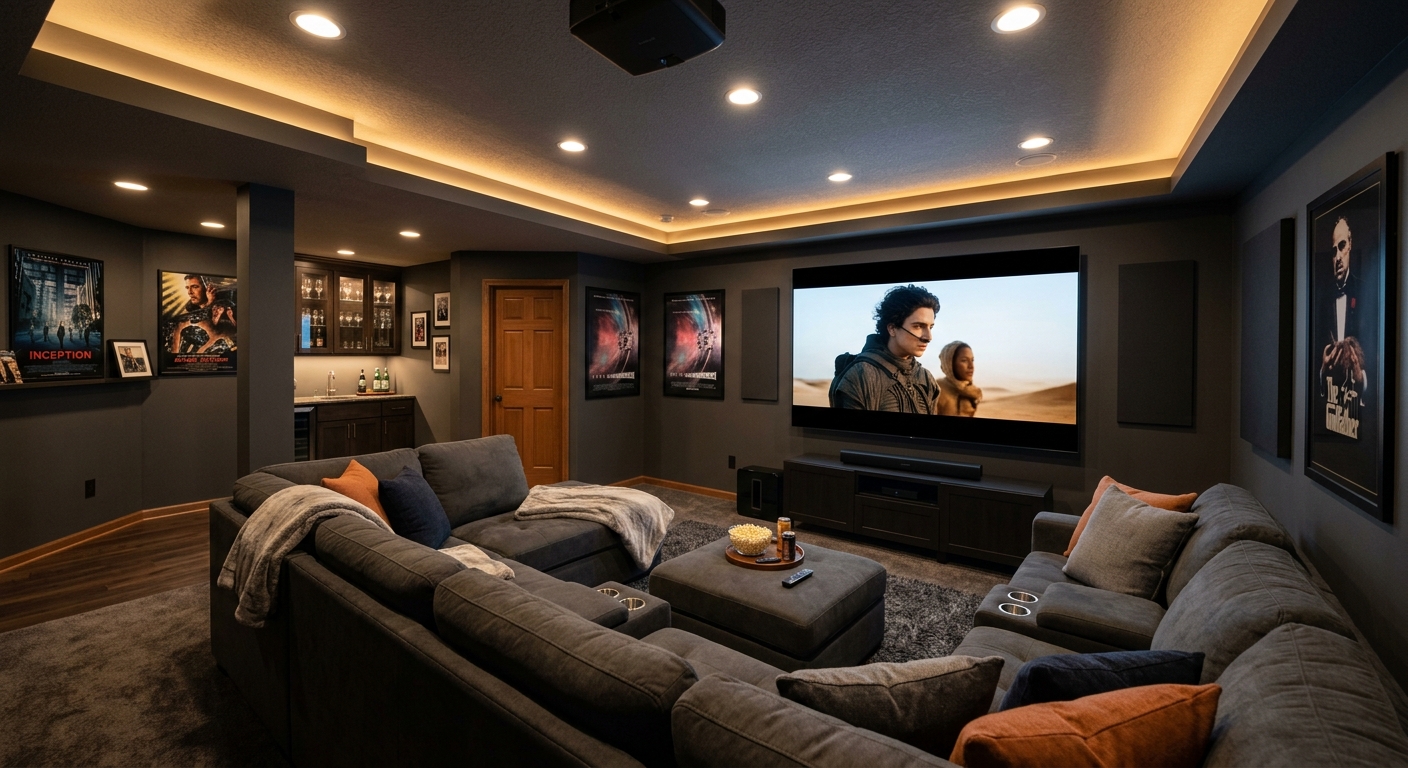
Basement finishing options and costs in Maplewood
Basement finishing in Maplewood is a practical way to add usable space, especially for families and multi-generational households in a neighbourhood where most homes are built with basements. In Maplewood, the population is small (1,090 people, Statistics Canada, 2021 Census), but that doesn’t mean fewer projects—on the Lower Mainland, even one or two streets can support a steady flow of renovations because basement demand clusters around the same older home pockets. Many of these homes have full basements that are unfinished or only partially finished, which is why you’ll see a lot of rec-room and office makeovers alongside occasional full conversions to rental-ready spaces.
In the Lower Mainland–Southwest, pricing is shaped more by moisture control and code-ready assemblies than by frost depth alone. Coastal BC’s milder temperatures still come with frequent rain and high humidity, so contractors prioritize waterproofing details, foundation drainage, mould-resistant materials, and proper dehumidification. At the same time, suite demand in nearby high-cost rental markets pushes design/engineering, trades scheduling, and permitting/inspection work toward the upper end of Canadian ranges. Availability can also tighten when multiple projects start near the same season.
Contractors in Maplewood typically see the highest demand around older residential areas near the more established streets where homes tend to have larger basements and straightforward access for deliveries. Once you’re ready to budget, the next step is comparing the typical scope-to-cost relationships below—then deciding how much of that moisture and fire-safety work you want included.
| Scope |
What's Included |
Permit Required |
Price Range |
| Basic rec room finish |
Surface prep, insulation where required, moisture-treated walls, drywall, ceiling finish, LVP or laminate-style flooring, paint, pot lights (allowance), trim and doors, basic electrical outlets |
Typically no (if no new plumbing, no new bathroom, and no sleeping room changes) |
$15,000–$30,000 |
| Home office finish |
Insulation + vapour control aligned to below-grade conditions, drywall, sound-aware detailing (where needed), dedicated 15–20A circuits (if adding equipment load), upgraded lighting, flooring, trim |
Typically no (unless adding plumbing or creating/altering a suite) |
$18,000–$35,000 |
| Full legal secondary suite (bath, kitchen, egress, fire separation) |
Kitchen + bathroom layout, rough-in and finish plumbing, fire separation elements, suite wiring, separate entrance treatment (where applicable), egress windows/doors, insulation assemblies, ventilation/dehumidification plan, inspections coordination |
Yes (secondary suite, sleeping areas, plumbing/electrical work) |
$60,000–$140,000 |
| Egress window installation only |
Excavation/cutting in concrete or foundation wall, temporary support/patch, window supply and install, exterior sealing details, interior finish reinstatement |
Usually yes if it creates/updates a legal sleeping space |
$5,000–$12,000 |
| Partial finish — framing and rough-in only |
Selective demolition, framing, insulation, vapour barrier installation, electrical rough-in (allowance), plumbing rough-in (if applicable), blocking for future fixtures, no finish trades beyond prep |
Often yes if rough-in includes electrical/plumbing changes |
$20,000–$45,000 |
| Luxury media or wet bar finish |
Accent walls, improved sound detailing, feature lighting, built-in millwork, upgraded flooring, wet-bar plumbing allowance (where included), specialty paint/finish, upgraded electrical locations |
May be yes if adding plumbing circuits or creating a wet area that triggers permit requirements |
$45,000–$80,000 |
Prices are estimates only and vary by project scope, site access and material selection.
What affects the price of basement finishing in Maplewood
In Maplewood and across the Lower Mainland–Southwest, it’s common to see quotes for the “same” basement finish land 30–50% apart. The difference is usually not the drywall—it’s the moisture strategy, code complexity, and how many trades need to coordinate. In British Columbia, the coastal climate means humidity and bulk water risk are front-of-mind. That changes the way contractors build the assembly (waterproofing attention, vapour control choices, and mould prevention), and it can add labour and materials even when temperatures are relatively mild compared with the interior of Canada.
Region-to-region, thermal and moisture requirements shift significantly. In colder provinces like Ontario and Alberta, the emphasis often turns toward frost management and robust exterior-grade insulation before framing. Coastal BC is wetter, so contractors prioritize waterproofing and interior drainage to reduce the chance of persistent dampness and odours—issues that can derail a finishing schedule. Meanwhile, basement suite demand in high-cost rental corridors affects pricing too: permits, design coordination, and secondary-suite labour tend to be pushed toward the upper end, similar to what homeowners see in major urban markets. That’s why a full legal secondary suite commonly sits in the $60,000–$140,000 band, while simpler rec-room work can fall closer to the $15,000–$35,000 band.
Two Maplewood examples that routinely raise costs: (1) foundation wall moisture or past seepage that requires additional waterproofing or drainage work before drywall goes up; and (2) creating a wet area where rough-in plumbing and tile backer systems increase labour. Costs can come down when there’s easy access for service runs, straight runs for ducting/electrical, and a dry foundation condition confirmed during pre-start moisture checks.
| Price Factor |
Why It Matters |
Cost Impact |
| Finishing scope — rec room vs. full suite (the biggest cost variable) |
A suite adds kitchen/bath, fire separations, additional electrical and plumbing, and more inspections |
Can change total pricing by $20,000–$90,000 depending on scope |
| Egress window required — cutting concrete foundation adds cost |
Cutting, support, proper sealing, and exterior finish work are labour-intensive |
Often adds $5,000–$12,000 per egress opening |
| Bathroom addition — rough-in plumbing and wet area tile |
Plumbing location, venting, waterproofing membranes, and tile systems affect both time and materials |
Commonly adds $12,000–$30,000 |
| Electrical circuits — dedicated panel, pot lights, outlets |
Electrical work must match load requirements for kitchens, showers, laundry, and lighting |
Often adds $2,500–$12,000 |
| Insulation and vapour barrier — depth of thermal requirement in British Columbia |
Below-grade assemblies must control moisture and meet code-required performance |
Can add $3,000–$10,000 versus minimal finishes |
| Flooring — waterproof LVP recommended for below-grade |
Durable floor finishes reduce damage if humidity fluctuates and help maintain cleanability |
Typically $1,500–$6,000 above basic options |
| Ceiling height — bulkheads around ducts/beams reduce usable height |
Low height can force bulkheads, soffits, or layout changes that increase labour |
Can add $1,500–$7,000 |
| Permit and inspection fees — secondary suite requires multiple inspections |
Suites often require additional documents, scheduling, and inspections across systems |
Often adds $1,500–$8,000 plus coordination time |
Permits & regulations in British Columbia
In British Columbia, basement finishing that adds a sleeping room, bathroom, new electrical circuits, plumbing rough-in, or any secondary suite typically requires a building permit. Egress windows are required for any habitable sleeping area below grade, because the intent is emergency escape and rescue. Secondary suite regulations vary by municipality, so you must confirm zoning and the required fire separation between suites with the local authority before starting.
What DOES require a permit in most Maplewood basement scenarios: creating or converting a bedroom (or any sleeping area), adding a full bathroom or plumbing fixtures, adding a kitchen or kitchenette with plumbing, installing egress windows for sleeping areas, adding or relocating electrical circuits (especially if you’re tying into panel capacity), and building/altering elements that affect fire separation and building layout.
What typically does NOT require a permit: finishing a rec room or home office without adding sleeping rooms, without adding plumbing, and without changing electrical circuit routes beyond minor cosmetic electrical (still confirm with your contractor). Even then, some municipalities may require an inspection for electrical work, because electrical permits and inspections are separate from the building permit.
To verify your contractor in Maplewood: (1) check the licence through the appropriate BC online registry for the trade they claim (and that the licence scope matches the work), (2) request a certificate of insurance naming you or confirming liability coverage for the project, and (3) ask for proof of clearance/compliance for required workers’ protection (BC coverage). If they can’t provide documentation quickly, pause and request it before signing.
Basement suite vs rec room — what makes sense in Maplewood?
In Maplewood, homeowners usually choose between two common basement-finishing paths: (1) a legal secondary suite or (2) a rec room/home office. A legal secondary suite is the higher-cost route, but it can be decisive when you want rental income to offset mortgage payments in a tight rental market. Suites require egress windows in each sleeping room, a full bathroom, a kitchenette (with appropriate plumbing), fire separation elements, and a building permit. You also need to confirm zoning—some properties are limited or may require additional steps.
A rec room or home office is typically faster and cheaper because it avoids many suite-specific requirements. You may not need egress windows unless you’re creating a bedroom or another defined sleeping space. That means the project can stay closer to the $15,000–$35,000 rec-room/office band, assuming your foundation moisture condition is manageable and you’re not adding new wet plumbing lines. In Maplewood’s Lower Mainland–Southwest climate, the moisture strategy still matters: even a rec room needs a proper below-grade insulation/vapour approach and ventilation/dehumidification planning to reduce the risk of mould complaints later.
Here’s a concrete example: if you’re deciding between a basic rec room at $15,000–$30,000 versus a legal secondary suite at $60,000–$140,000, the suite premium might make sense only if you can realistically achieve the rental objective and you have the layout to accommodate bathroom/kitchen and egress without major reconstruction. If your goal is comfort, storage, and a dedicated workspace, the payback is measured in lifestyle—often the cheaper option is the right one.
Timing-wise, suite approval in British Columbia can take longer than a rec-room permit because you’re coordinating multiple compliance points and inspections (and sometimes responding to plan clarifications). If you want predictability, start with a contractor assessment of foundation condition, layout feasibility, and a permit-ready design before you commit.
| Option |
Typical Cost |
Permit Needed |
ROI Potential |
Best For |
| Rec room (basic finish) |
$15,000–$30,000 |
Usually no (no sleeping room, no plumbing) |
Low (no rental) |
Comfort upgrades and flexible family space |
| Home office (dedicated space) |
$18,000–$35,000 |
Usually no (no sleeping room, no plumbing) |
Moderate (indirect value) |
Work-from-home needs with better insulation/control |
| Legal secondary suite (full rental unit) |
$60,000–$140,000 |
Yes (suite, sleeping areas, plumbing/electrical) |
High (rental income) |
Maximizing income potential if zoning and layout fit |
| In-law / nanny suite (non-rental) |
$45,000–$110,000 |
Often yes if it includes a kitchen/bath or sleeping areas below grade |
Medium (family use, not tenancy) |
Multi-generational living with privacy |
| Media / entertainment room |
$35,000–$80,000 |
Often no (unless adding plumbing/electrical beyond minor) |
Low to moderate (lifestyle value) |
Home theatre with upgraded lighting and finishes |
| Home gym |
$20,000–$45,000 |
Usually no (unless changing electrical/load significantly) |
Low (no rental) |
Durability and moisture-proof flooring priorities |
How to choose a basement finishing contractor in Maplewood
Choosing a contractor in Maplewood is less about flashy websites and more about verification and clarity. In British Columbia, confirm trade licensing by asking for the applicable licence number and scope for the work they’ll perform (and for subcontractors they use). For liability insurance, request a current certificate of insurance and verify coverage limits are appropriate for renovation work, with your project identified. For workers’ protection coverage, ask for evidence of required coverage/compliance and insist they can provide it before the first day on site—don’t wait until problems appear.
Next, get 2–3 itemised written quotes. You want labour and materials broken out, not a single lump-sum line that hides decisions like insulation type, vapour control method, lighting allowance, disposal, and who is responsible for permit coordination. Read the scope carefully: what’s excluded (e.g., furniture moves, existing insulation removal, duct work changes, extra electrical outlets), is permit pulling included, and is disposal/dumpster included? For warranties, ask for the length of the workmanship warranty and what the manufacturer warranty covers. If the product warranty is transferable to a new owner, ask that it’s documented.
Payment schedule matters. Never pay more than 10–15% upfront. Use milestones and keep a holdback until the job is complete and deficiencies are corrected. Finally, get a start date and completion estimate in writing, and ensure the schedule aligns with permit/inspection steps—especially for suite and egress work.
- Ask for licence numbers and confirm they cover the exact scope (electrical/plumbing separately where applicable).
- Request a certificate of liability insurance before signing; confirm it’s valid and project-specific.
- Proof of required workers’ protection/compliance coverage (ask early, not after kickoff).
- Get 2–3 itemised quotes with line items for insulation/vapour control, drywall, flooring, and electrical allowances.
- Confirm whether permit pulling is included and who coordinates inspections.
- Clarify what’s included in moisture mitigation (foundation assessment, drainage review, vapour strategy).
- Verify disposal/dumpster and dump fees are included or clearly excluded.
- Ask who supplies ceiling heights, soffits/bulkheads approach, and how duct/beam obstructions are handled.
- Check that egress/window work includes cutting, sealing, exterior finish reinstatement, and interior trim return.
- Request a detailed warranty statement: workmanship length, product warranty, and transferability.
- Use a milestone payment plan; keep at least a 10–15% holdback until punch list completion.
- Require a written timeline with inspection milestones for any suite/sleeping-area changes.
Red flags in Maplewood: (1) a quote that won’t specify insulation/vapour control details for below-grade walls; (2) refusing to provide licence numbers and insurance documentation; (3) lump-sum pricing with no allowances for electrical/light fixtures and no disposal line item; (4) asking for large upfront payments beyond 10–15%; and (5) vague timelines that ignore permit/inspection steps for suites and egress windows.
Frequently asked questions — basement finishing in Maplewood
What is the difference between a finished and semi-finished basement?
In Maplewood and across British Columbia, “semi-finished” usually means the basement is partly upgraded—common examples are framing and insulation done, maybe drywall installed in select areas, but without a complete ceiling finish, trim, final flooring, or fully commissioned electrical. “Finished” typically means the basement is complete and ready for everyday use: walls and ceilings are fully finished (drywall/paint), floors are installed, lighting fixtures are in place, and the space is sealed and ventilated properly for below-grade conditions. For pricing, semi-finished work often falls in the partial-framing/rough-in range, while a fully finished rec room or office typically aligns closer to the $15,000–$35,000 band depending on moisture requirements and electrical scope.
How do I soundproof a basement suite in Maplewood?
For a basement suite in Maplewood, sound control is usually addressed at the insulation and framing stage, not after drywall goes up. Contractors should use proper resilient channels or sound-rated assemblies where feasible, seal all gaps around penetrations (pipes, wiring runs), and ensure fire separation elements are built to code while also supporting acoustic performance. Because Lower Mainland–Southwest projects face persistent humidity, you also want mould-resistant materials and good ventilation so you’re not sacrificing acoustics for moisture safety. In practice, soundproofing measures often add labour and specific products, so it can move your project toward the higher end of suite budgets—especially if you’re adding a bathroom/kitchen and multiple electrical circuits in addition to acoustic upgrades.
How much does it cost to finish a basement in Maplewood?
Basement finishing in Maplewood commonly lands within the regional price bands driven by below-grade moisture control, code requirements, and the complexity of your scope. A basic rec room finish typically falls around the $15,000–$35,000 range, while projects that include more electrical work, better insulation details, and higher-quality finishes can trend upward. If you’re building a legal secondary suite with a full kitchen and bathroom, sleeping areas, egress requirements, and fire separation, budgets usually start much higher, commonly within the $60,000–$140,000 band. Egress window installation only—useful if you already have the finish framework—often falls around $5,000–$12,000 per opening, depending on foundation conditions and sealing/patching complexity.
Do I need a permit to finish my basement in British Columbia?
In British Columbia, permit needs depend on what you’re changing. In general, basement work that adds a sleeping room, a bathroom, new electrical circuits, plumbing rough-in, or creates a secondary suite requires a building permit. If you’re adding an egress window for a bedroom/sleeping area, that also ties into the permit process. Electrical permits and inspections are separate and must be handled by a licensed electrician; plumbing typically requires a licensed plumber and permits in most municipalities. If you’re only finishing a rec room or home office without creating a sleeping room and without plumbing changes, it often doesn’t require a building permit, but you should confirm with your contractor and local authority. Always ask what’s included in the quote for permits/inspections—especially for suite work.
How long does a basement finishing project take in Maplewood?
Timelines in Maplewood depend on scope and scheduling of trades, but below-grade moisture readiness and permit steps are the usual drivers. A straightforward rec room or office finish often takes several weeks once approvals and materials are on site—longer if the contractor discovers moisture issues that require additional waterproofing or drainage review before framing. A legal secondary suite is typically longer because it involves plumbing and electrical rough-ins, insulation and fire separation details, egress window work, plus multiple inspections. Weather also matters indirectly in the Lower Mainland–Southwest because high humidity can affect drying and curing schedules for waterproofing and adhesives, and contractors may adjust sequencing to manage it. If you want the shortest timeline, ask for a moisture assessment plan and a written schedule that includes inspection milestones.
What is an egress window and do I need one for a basement bedroom in Maplewood?
An egress window is an emergency exit window designed so a person can escape from a basement bedroom during a fire or other emergency. In Maplewood, if you’re converting any part of the basement into a legal sleeping room below grade, you generally need an egress window that meets code requirements for size, placement, and operability. Installing one often involves cutting the foundation wall or concrete and then sealing and reinstating interior and exterior finishes—so it carries both labour and permit complexity. As a budget reference, egress installation only typically falls around $5,000–$12,000 per opening, depending on foundation conditions. If your plan includes a bedroom, confirm egress requirements early so you don’t finish around the location and then have to re-open walls later.