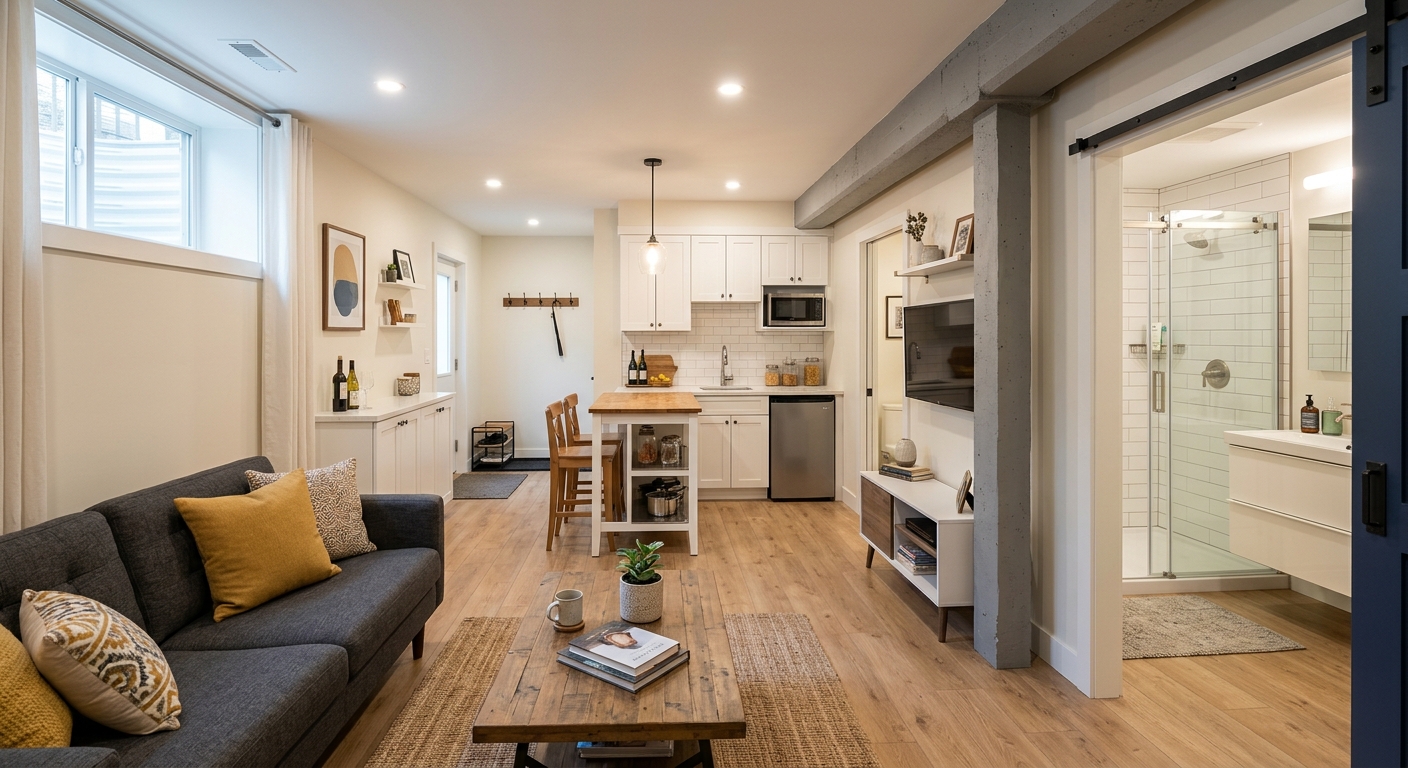
Basement finishing options and costs in Richmond
Basement finishing in Richmond, Ontario is usually about more than making space look good—it’s about building a durable, code-ready assembly that can handle Ottawa-region winters. With a small local population (4,055 residents, Statistics Canada, 2021 Census), contractors still see steady demand because most area homes are set up to use basements, and many households expand living space as their families grow or as work-from-home needs change. In this part of the Ottawa economic region, cold snaps and frost penetration push moisture and condensation risk higher than many homeowners expect, so the most “affordable” quote is rarely the true lowest-cost option once vapour control, insulation depth, and drainage repairs are included.
Labour availability can also affect pricing. When a project includes plumbing, electrical, or a secondary suite scope, you’re coordinating trades and inspection windows—this is one reason two contractors can quote different totals for the same room size. In Richmond, finished basements are especially in demand in family-oriented pockets such as the west-end areas near Britannia Road, where homeowners frequently want practical rec space and added bedrooms for growing households.
To compare options quickly, use the table below as a realistic range for the Ottawa economic region. Then, we’ll narrow it to your exact scope based on moisture conditions, insulation requirements, and whether you’re finishing a room or adding a legal unit.
| Scope |
What's Included |
Permit Required |
Price Range |
| Basic rec room finish |
Insulation review, vapour barrier (as required), drywall, taped/painted finish, LVP or carpet, ceiling/trim, and basic pot lights |
Usually not for simple cosmetic-only work; permits may be required if you add electrical circuits or alter openings |
$30,000–$55,000 |
| Home office finish |
Enhanced insulation plan, drywall, finish ceiling, dedicated circuits for office use, outlets and task lighting, flooring |
Often yes if you add new electrical circuits or any structural changes |
$15,000–$35,000 |
| Full legal secondary suite (bath, kitchen, egress, fire separation) |
Kitchen + bath rough-in/finish, separate entrance allowance, egress window work, fire separation details, upgraded insulation/vapour control, and full electrical/plumbing coordination |
Yes—secondary suites and habitable sleeping rooms below grade require permits and inspections |
$60,000–$120,000+ |
| Egress window installation only |
Core drilling/cutting, window installation, sump/grade considerations as needed, finishing returns |
Typically yes (inspection required) |
$2,500–$6,000 |
| Partial finish — framing and rough-in only |
Framing, insulation/vapour barrier prep (as required), drywall base prep, basic plumbing/electrical rough-ins |
Usually yes if rough-ins include plumbing/electrical changes beyond cosmetic work |
$20,000–$45,000 |
| Luxury media or wet bar finish |
Feature walls, upgraded sound control, custom built-ins, premium flooring, upgraded lighting scenes, wet bar cabinetry/backsplash |
Yes if you add plumbing/electrical scope or alter walls for wet area |
$45,000–$90,000 |
Prices are estimates only and vary by project scope, site access and material selection.
What affects the price of basement finishing in Richmond
In Richmond and across the Ottawa economic region, it’s common to see quotes for the “same” basement end up 30–50% apart. The biggest drivers aren’t the studs or drywall—they’re moisture remediation, insulation depth and vapour control, and how many trades and inspections your scope triggers. Ontario’s cold winters and frost penetration mean basements need a more carefully designed thermal envelope and drainage strategy than milder climates. In practice, that can shift a job from “drywall-and-floor” to “waterproofing-first, then framing,” which changes labour, materials, and timeline.
Regional climate also matters when comparing estimates. Coastal BC often pushes higher spend on aggressive waterproofing and mould prevention because moisture control starts with keeping water out. Ontario and Alberta are more about cold-weather condensation control—robust exterior-grade or appropriate thermal insulation, continuous vapour barriers, and air sealing before drywall—because warm indoor air meeting cold surfaces behind finished walls causes condensation. Meanwhile, basement suite demand is higher in very high-priced markets like Toronto and Vancouver, where rental income can recover renovation costs faster (often 4–7 years), pushing permits, design work, and suite-specific labour costs higher. In the Ottawa region, secondary units are still growing but usually don’t command those same overheated premium rates, which is why full-suite finishing often sits in the mid-five- to low-six-figure bands rather than becoming consistently “top-of-market.”
Two examples that show how local conditions raise cost in Richmond: if your foundation shows ongoing seepage, you’ll likely need perimeter drainage and/or an interior waterproofing system before any insulation—otherwise you’re insulating over a problem. If you’re adding an egress bedroom, cutting concrete and installing a compliant window can add thousands; that’s one reason egress work is commonly priced in the $2,500–$6,000 range. Conversely, if your basement already has stable moisture conditions and clear access for insulation upgrades, your scope may align more with the $30,000–$90,000 full-finishing band instead of climbing toward full-suite or luxury pricing.
| Price Factor |
Why It Matters |
Cost Impact |
| Finishing scope — rec room vs. full suite |
Bathrooms, kitchens, fire separation, and additional plumbing/electrical make suites far more complex |
Largest swing; can add roughly $30,000–$70,000+ depending on size and wet-area count |
| Egress window required |
Cutting/coring foundation, installing compliant window, and managing grading/clearances |
Often $2,500–$6,000 per window installed |
| Bathroom addition |
Rough-in plumbing, venting, waterproofing details, and tile/wet-area work |
Commonly adds about $10,000–$25,000 depending on layout and finishes |
| Electrical circuits |
Dedicated circuits, panel work, and safe pot light/outlet layout |
Frequently adds $3,000–$15,000 based on number of circuits and service upgrades |
| Insulation and vapour barrier |
Ontario depth/air-seal requirements and continuous vapour control against condensation |
Can move a job by $4,000–$18,000 depending on wall condition and insulation strategy |
| Flooring |
Below-grade floors need moisture-tolerant systems (often waterproof LVP) |
Typical added materials/underlay $1,500–$6,000 vs. standard finishes |
| Ceiling height |
Bulkheads around ducts/beams reduce usable height and can add framing/finishing labour |
May add $2,000–$8,000 on tighter basements |
| Permit and inspection fees |
Secondary suites and habitable sleeping rooms involve multiple inspections |
Project costs commonly increase by several thousand once permits, drawings, and admin are included |
Permits & regulations in Ontario
In Ontario, most basement finishing that changes building systems or adds habitable space typically requires a building permit. If your project includes a sleeping room, a bathroom, any new electrical circuits, plumbing rough-in, or a secondary suite, plan on permits and inspections. Egress windows are mandatory for any habitable sleeping area below grade—this is a key compliance point and a common reason costs rise when homeowners initially plan to “just add drywall.” Secondary suite rules can vary by municipality, so Richmond homeowners should confirm zoning and the required fire separation details with the local authority before signing.
What does require a permit, in plain terms: new plumbing lines/rough-in, new electrical circuits (including lighting and outlets when they involve panel/circuit changes), construction or conversions to sleeping rooms, bathroom additions, and any legal secondary suite work. What often does not require a permit is purely cosmetic finishing where you don’t add electrical circuits, plumbing, or change openings—however, your contractor should still confirm this based on your exact scope and local checklist.
To verify an Ontario contractor’s credentials in Richmond, start with their Ontario licence status online (and confirm the exact company name matches the quote and invoice). Then ask for a current certificate of insurance and a clearance letter for coverage. For worker protection, request proof of WSIB/WCB coverage where applicable, and verify dates match your project period. A reputable contractor will provide these documents quickly before work begins.
Basement suite vs rec room — what makes sense in Richmond?
In Richmond, the two most common basement finishing paths are (1) a legal secondary suite and (2) a rec room or home office. A legal secondary suite is the higher-cost option because it must include more than “nice finishes”: you’ll need an egress window in each sleeping room, a full bathroom (and often a kitchenette), fire separation between suites/areas as required, plumbing and electrical designed for the unit, and a building permit. It’s typically priced in the $60,000–$120,000+ range once you include the suite-specific requirements. The upside is income potential—if your plan aligns with local rental demand, the renovation can become a financial lever rather than just added space.
By contrast, a rec room or home office usually costs less and is faster because you avoid suite-level fire separation and the egress requirements (unless you’re adding a bedroom). In many Richmond basements, homeowners can come closer to the $30,000–$55,000 band for a basic rec room finish, or the $15,000–$35,000 band for an office scope with dedicated electrical. The trade-off is there’s no direct rental ROI—so the decision often comes down to whether you want additional living space today or income support.
Climate and building-stock reality also matter. Ottawa-region cold drives moisture management costs behind finished walls; if you’re doing a full-suite build, you can’t postpone insulation/vapour control details without risking future mould and damage. A concrete example: if you’re debating adding one bedroom for resale value only, an egress window may add $2,500–$6,000 plus inspection time. That can be justified for comfort and function, but it’s usually not the right move if your goal is strictly ROI—legal suite planning tends to be the more deliberate route when you want rental income.
For timing, secondary suite approvals typically require a permit process with multiple reviews, and the schedule can be longer than a rec-room-only finish. Your contractor should lay out the steps and coordination needs before demolition or framing so you’re not stuck waiting on inspections.
| Option |
Typical Cost |
Permit Needed |
ROI Potential |
Best For |
| Rec room (basic finish) |
$30,000–$55,000 |
Usually not for cosmetic work; often yes if adding new circuits |
Low (enjoyment value only) |
Families needing extra space fast |
| Home office (dedicated space) |
$15,000–$35,000 |
Often yes for dedicated circuits |
Moderate (productivity benefit, resale flexibility) |
Work-from-home households |
| Legal secondary suite (full rental unit) |
$60,000–$120,000+ |
Yes (suite, sleeping room, bathroom/electrical/plumbing, egress) |
High (rental income potential) |
Owners seeking income and willing to manage permitting |
| In-law / nanny suite (non-rental) |
$40,000–$90,000 |
Often yes if adding plumbing/electrical and habitable rooms |
Low to moderate (family utility) |
Families needing nearby living space |
| Media / entertainment room |
$45,000–$90,000 |
Usually yes if adding wet bar/plumbing or new circuits |
Low (lifestyle value) |
Home theatre setups and hosting |
| Home gym |
$25,000–$55,000 |
Usually no for finishes only; often yes if adding dedicated electrical |
Moderate (resale/health value) |
Active households needing durable finishes |
How to choose a basement finishing contractor in Richmond
Choosing the right contractor in Richmond is mostly about risk control. Start by verifying Ontario licensing and that the exact legal entity on the quote matches the paperwork you check. Ask for liability insurance (certificate of insurance showing active coverage) and confirm WSIB/WCB status for their workforce. How to check: request certificates directly from the contractor, confirm policy dates cover your project window, and ensure the certificate lists the appropriate insured parties. If they can’t provide clear documents quickly, treat that as a red flag.
Next, get 2–3 itemised written quotes rather than a lump sum. You want a labour + materials breakdown, line items for insulation and vapour barrier approach, electrical scope (circuits, outlets, pot lights), plumbing rough-in/fixtures (if applicable), and details on disposal and protection. Confirm whether the permit pull is included and who pays for inspections. Read exclusions carefully: if waterproofing remediation or sub-slab drainage is discovered mid-project, you need to know whether it’s handled as a change order and what rates apply.
Warranty matters. Ask for the workmanship warranty length, what products are covered (manufacturer warranty terms), and whether warranties are transferable if you sell the home. For payments, keep it sensible: never pay more than 10–15% upfront, and hold back a final portion until completion and punch-list items are done. Also insist on a written start date and completion estimate—basement projects often stall when inspection scheduling is unclear.
- Provide Ontario licence details that match the quote and invoice legal name
- Share a current certificate of liability insurance before signing
- Confirm WSIB/WCB coverage status with proof and coverage dates
- Use itemised quotes: labour and materials separated by scope
- Clearly list insulation type, vapour barrier approach, and air-sealing steps
- Specify flooring system (including below-grade underlay or waterproof LVP requirements)
- List electrical details: number of circuits, outlets, and lighting plan
- Include plumbing line-item pricing if you’re adding a bathroom or kitchenette
- State whether permit pulling, drawings, and inspection fees are included or billed separately
- Confirm site protection and construction cleanup/disposal are included
- Demand a workmanship warranty and product warranty terms in writing
- Set a payment schedule with a holdback until the final walkthrough
Red flags in Richmond basements include contractors who: promise “cheap” finishing without discussing moisture control; won’t provide proof of licence/insurance/WSIB/WCB; give lump-sum pricing with no line items for electrical/plumbing, insulation, or vapour barrier; skip mentioning permits and egress requirements for sleeping rooms; or pressure you to pay most of the job upfront.
Frequently asked questions — basement finishing in Richmond
Do I need a vapour barrier in my Richmond basement?
Often, yes—because Richmond (Ottawa economic region) basements face cold winters where warm indoor air can condense on cooler surfaces. In Ontario, the goal is a continuous vapour control layer designed for your assembly, not just a random sheet behind drywall. Your contractor should assess existing wall/foundation conditions, current moisture history, and the insulation strategy (including whether you’re using a framed cavity, rigid foam, or other methods). If there’s active moisture, vapour barrier placement alone won’t solve the problem—you typically need waterproofing/drainage first. A responsible quote will explain how vapour control is achieved and how air sealing is handled before finishing. This is one reason moisture-related items can swing pricing significantly versus a basic $30,000–$55,000 rec room finish.
What flooring is best for a finished basement in Richmond?
For Richmond basements, waterproof LVP (luxury vinyl plank) is a common best choice because it tolerates occasional humidity swings better than many traditional floor systems. The “best” flooring also depends on your subfloor and moisture conditions: you want an underlay appropriate for below-grade use, and you want the installer to manage transitions around floor edges and any drain paths. If you’re finishing a suite area with higher traffic or a wet bar/bath nearby, prioritizing moisture-resistant materials is even more important. Avoid carpeting without proper vapour/insulation control, because condensation behind finishes can create odours and hidden mould risks. A flooring upgrade can be an easy way to improve long-term durability, but it should be paired with the right thermal and moisture layers—otherwise you can still end up with problems behind the walls.
How do I prevent moisture problems in a finished Richmond basement?
Moisture prevention starts before framing: confirm drainage around the foundation, review any sump activity, and address active seepage before you add insulation and drywall. In Richmond, cold-weather condensation is a real risk, so your contractor should build a continuous vapour barrier strategy and properly air-seal penetrations (around pipes, rim joists, and electrical lines). If you’re finishing a larger scope, insist on a clear plan for insulation depth and thermal breaks—insulation matters as much as vapour control in Ontario winters. Also, plan for practical humidity control: a well-sized dehumidifier can help stabilize indoor RH during shoulder seasons. If a previous owner never had the basement finished, assume the default condition needs careful testing. That’s why “foundation-first” costs sometimes push a job beyond basic bands and toward full-finishing ranges.
What is the ROI on finishing a basement in Richmond?
Basement finishing ROI is usually stronger for homeowners who gain functional space that buyers recognize—like a rec room, office, or an additional bedroom with code-compliant egress—compared with finish changes that don’t add usable capability. A legal secondary suite can have the highest financial upside due to rental income potential, but it requires more permitting complexity and is typically priced in the $60,000–$120,000+ range. Whether that’s justified depends on Richmond area rental demand, your timeline for approvals, and how quickly you can get inspections done. If your goal is resale, smaller rec-room or office projects in the $15,000–$55,000 range can offer a better “cost-to-use” balance. For any ROI conversation, ask your contractor to itemise what you’re paying for (moisture control, insulation, electrical, plumbing) so you understand what will actually influence long-term value and buyer confidence.
How do I compare basement finishing quotes in Richmond?
Compare quotes line-by-line, not by the final total alone. Ask for an itemised breakdown covering insulation and vapour barrier approach, drywall/finish level, flooring type and subfloor prep, and electrical scope (which circuits are added). For any sleeping-room plan, confirm how egress will be handled—egress window work is commonly $2,500–$6,000 per window, and skipping this detail leads to misleadingly low quotes. Also check whether waterproofing remediation is included if moisture is found; if not, confirm the change-order rate. Look for permit language: in Ontario, new electrical circuits, plumbing rough-in, bathroom work, sleeping rooms, and secondary suites generally require permits and inspections. Finally, validate contractor documentation (licence, insurance, WSIB/WCB) so you’re not comparing a compliant plan to one that saves money by cutting corners. Two quotes that seem close can differ by tens of thousands once you add moisture upgrades.
Should I waterproof before finishing my basement in Richmond?
If you see any seepage, damp walls, recurring odours, efflorescence, or sump issues, waterproofing should be addressed before finishing. In Richmond’s Ottawa-region climate, finishing over an unresolved moisture problem is a fast track to condensation behind drywall, mould risk, and expensive removal later. Even when the basement “looks dry,” cold-season humidity can create condensation if insulation and vapour control aren’t properly designed, but waterproofing addresses bulk water first. A solid contractor will evaluate conditions, explain what they’ll do to manage water, and then outline how the thermal envelope and vapour layer will be built. If your scope includes a secondary suite, bathroom, or a habitable sleeping area, being proactive is even more important because inspections and code expectations require a robust, durable assembly. If you’re currently budgeting within the $30,000–$90,000 full-finishing band, treating moisture early can protect the full spend.